
What is RTK (Real-Time Kinematic)?
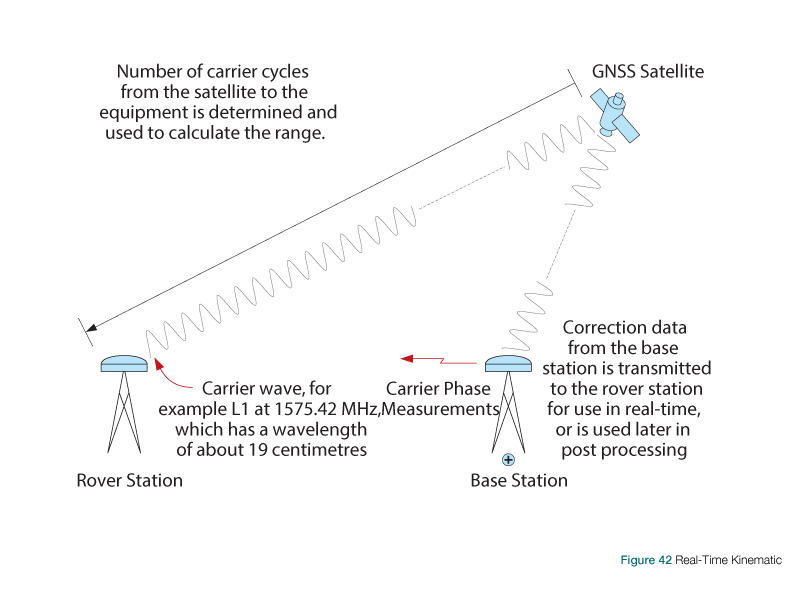
RTK stands for Real-Time Kinematic and is a technique that uses carrier-based ranging and provides ranges (and therefore positions) that are orders of magnitude more precise than those available through code-based positioning. RTK techniques are complicated. The basic concept is to reduce and remove errors common to a base station and rover pair
What Is A GNSS Receiver?
A GNSS Receiver is an essential tool for any construction it receives data from the GPS satellites and error correction from the base station. This can be in the form of the MCR-3 or MCi-4 on a dozer or excavator or the RTK Rover user by the surveyor
GNSS Limitations
Even though GNSS Receivers are amazing and can make a huge difference to the accuracy, speed and confidence of a job there are also some very obvious and detrimental limitations to this kind of technology.
Line Of Site (LOS)
One of the Limitations of GNSS Receivers is the fact that each receiver needs Line Of Site (LOS) to the constellation satellites. This make using a GNSS Receiver in a heavily covered area, Indoor or in really bad weather conditions causes GNSS Receivers to receiver low quality data.
Constellation Connection
To receive quality data your GNSS Receivers are required to connect to constellations. There are 5 different constellations based all over the world these are; GPS (Global Positioning System - American), GLONASS (Global Navigation Satellite System - Russian), BEIDOU (Chinese), QZSS (Quasi-Zenith Satellite System - Japanese) & SBAS (Satellite-based Augmentation System - Ministry of Land). Some receivers only have the ability to connect to certain constellations, having the ability to connect to more constellations will mean more satellites are connected and your data is more accurate and reliable.
Receiver Quality
On the market today there are hundreds of different brands out there, they vary in price drastically. From your big name brands such as; Leica, Trimble, Topcon, Spectra Precision, CHC & Unistrong to your many lesser well known brands from around the well. Each GNSS Receiver they produce have different specifications. From high quality boards, Quality antennas, Rugged housings and Battery life all determine the quality of a GNSS Receiver. When it comes to purchasing a GNSS Receiver these attributes all play a part in the quality of GNSS Receivers.
What are GPS Corrections?
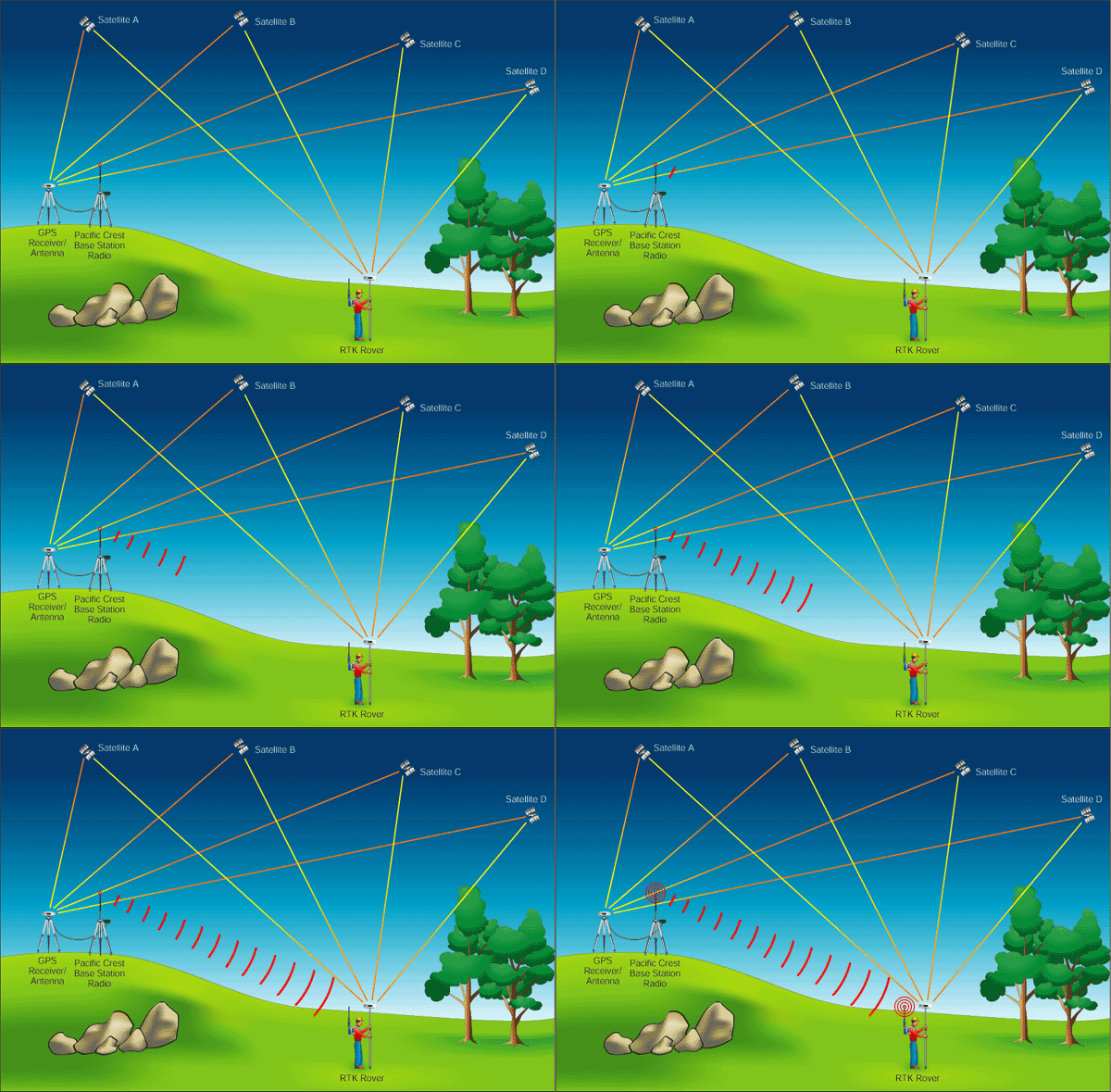
When we talk about corrections we are talking about the way the error information is sent to the Rover/Machine from the Base Station there are 2 ways this is done Radio Signal (UHF or Spread Spectrum) or Network (Internet). This is how the accuracy of the GPS position is improved to +/- 30mm
Radio Correction
Ultra high frequency (UHF) - band width is 450Mhz to 470MhzRadio waves in the UHF band travel almost entirely by Line of Sight (LOS) and ground reflection. UHF radio waves are blocked by hills and cannot travel beyond the horizon, but can penetrate foliage and buildings for indoor reception. Since the wavelengths of UHF waves are comparable to the size of buildings, trees, vehicles and other common objects, reflection and diffraction from these objects can cause fading due to multipath propagation, especially in built-up urban areas.
Network Correction
Using the local telecommunications network to send the error information from the base to the machine via the internet. The limitations of this is down to if you have phone coverage in the area the Rover or Machine is working.